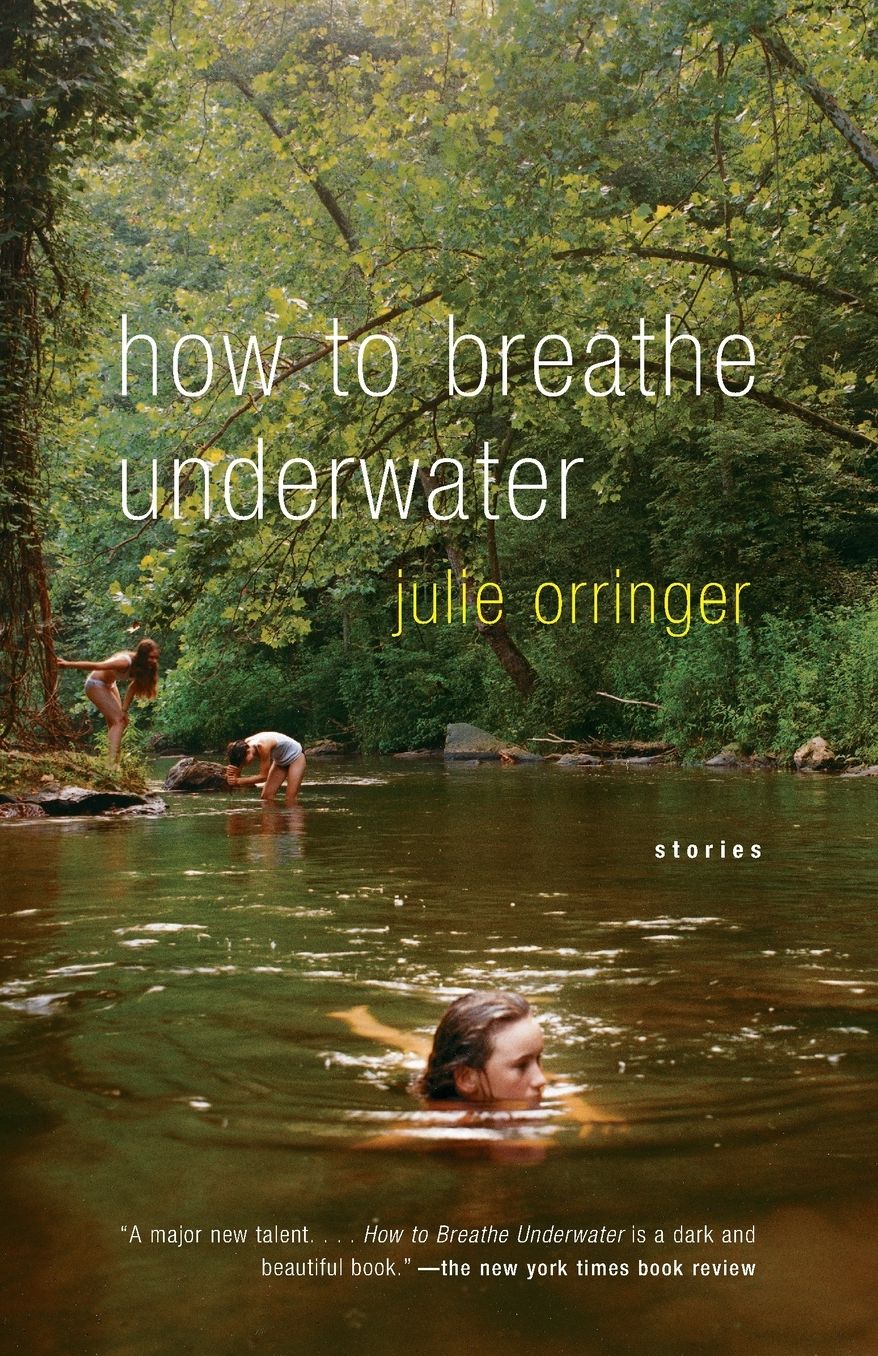
How To Breathe Underwater
Nine fiercely beautiful, impossible-to-put-down stories from a young writer who has already received immediate worldwide attention. Julie Orringer’s characters–all of them submerged by loss, whether of parents or lovers or a viable relationship to the world in general–struggle mightily against the wildly engulfing forces that threaten to overtake us all. All of them learn, gloriously if at great cost, how to breathe underwater.
In “Pilgrims,” a band of motherless children torment each other on Thanksgiving day. In “The Isabel Fish,” the sole survivor of a drowning accident takes up scuba diving. In “When She Is Old and I Am Famous,” a young woman confronts the inscrutable power of her cousin’s beauty (“Aïda. That is her terrible name. Ai-ee-duh: two cries of pain and one of stupidity”). In “The Smoothest Way Is Full of Stones,” the failure of religious and moral codes–to protect, to comfort, to offer solace–is seen through the eyes of a group of Orthodox Jewish adolescents discovering the irresistible power of their burgeoning sexuality.
In story after story, Orringer captures moments when the dark contours of the adult world come sharply into focus: Here are young people abandoned to their own devices, thrust too soon into predicaments of insoluble difficulty, and left to fend for themselves against the wide variety of human trouble. Buoyed by the exquisite tenderness of remembered love, they learn to take up residence in this strange new territory, if not to transcend it, and to fashion from their grief new selves, new lives. Orringer’s debut collection blazes with emotion, with human appetite, with fortitude, with despair; these nine uncommonly wise and assured stories introduce an astonishing new talent.
Select praise for How To Breathe Underwater
“
These stories are without exception clear-eyed, compassionate and deeply moving…Even her most bitter characters have a gift, the sharp wit of envy. This, Orringer’s first book, is breathtakingly good, truly felt and beautifully delivered.
The Guardian
“
The harsh landscape in which Orringer’s characters dwell corresponds to the fierce beauty of her writing. Even the grimmest of these stories conveys, along with anguish, a child’s spark of mystery and wonder.
The New York Times
“
Unclouded by sentimentality….Orringer endows her situations and her characters — adults as well as children — with complexity and humor….She writes with penetrating intelligence and remarkable self-possession.
The Boston Globe
“
Wry, poignant. . . . Such clear-eyed precision makes Orringer’s debut as heartbreaking as it is clever.
Entertainment Weekly
“
Julie Orringer writes with virtuosity and depth about the fears, cruelties, and humiliations of childhood, but then does that rarest, and more difficult, thing: writes equally beautifully about the moments of victory and transcendence.
George Saunders
“
Orringer writes about the things that everyone writes about — youth, friendship, death, grief, etc. — but her narrative settings are fresh and wonderfully knotty.
Nick Hornby, The Believer