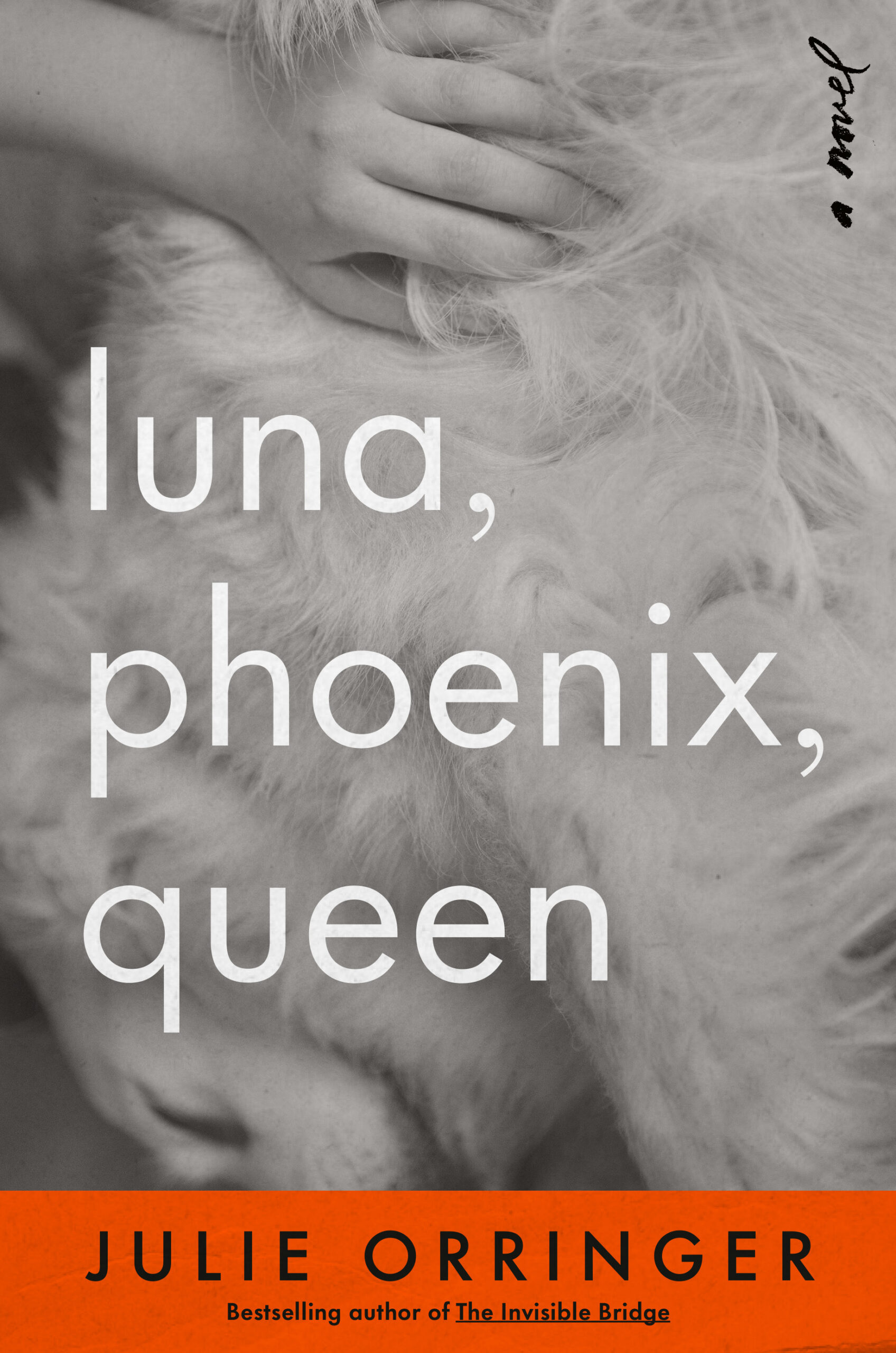
Luna, Phoenix, Queen
Dava and Barr Pennington, professors at a Midwestern university, both harbor potent secrets. Fiction writing is his specialty, English literature is hers. But Dava is unhappy in their marriage, and secretly in love with a colleague, Svetlana White, who teaches in the Russian Studies department; spurred by their complicated liaison, she spends her nights working on a novel about two women who run a domestic violence shelter in coastal Maine.
Though she loves the work and the refuge it provides, the writing becomes increasingly difficult as her memory begins to fail; tests reveal that she’s suffering from early-onset Alzheimer’s. After a precipitous decline, she moves to a memory-care facility in a neighboring town. Soon afterward, her husband, alone in the house at night, discovers her hidden manuscript, which he reads with envy, and then with anger, as he extrapolates his wife’s affair from the relationship described in the novel’s pages. Over the next two years he rewrites the novel and publishes it as his own, to wide acclaim. But persistent feelings of guilt lead him to confess his theft to an unlikely party, who leads others to the truth.
Luna, Phoenix, Queen tells its tale of artistic and marital betrayal in a chorus of voices. We hear from Barr as he becomes obsessed with Luna, a horrifically injured dog at a local shelter; from Dava as she meets Svetlana for the first time, on a transatlantic flight to Dublin; from Milo, Dava’s son, as he hides in the woods with Naomi, Svetlana’s daughter; from Svetlana, experiencing the loss of a relationship that ended before it could come to fruition; from Evie, Barr’s research assistant, who witnessed Dava’s last days at home with her husband; from James, the Penningtons’ younger son, who makes a startling discovery after his father’s death; and from Milo and Svetlana again, as they grieve the injustice of Barr’s theft and confront the devastation of Dava’s disease.
In a narrative that spans four decades and four thousand miles, Luna, Phoenix, Queen illuminates the power of storytelling and explores the terror of losing the ability to make sense of our world. It is a cry of rage against our vulnerability and helplessness; an acknowledgment of the mysteries beneath the familiar surface of our world; and ultimately, if unexpectedly, a radical testament to love in its many forms.
Select praise for Luna, Phoenix, Queen
“
Luna, Phoenix, Queen brilliantly emphasizes the agony of isolation in its various forms, and the relief that can only come in telling a story for oneself.
New York Times
“
Luna, Phoenix, Queen breaks all the rules and makes its own. Gripping, heartbreaking, redemptive and a joy to read, Orringer has given readers a great gift. It will knock your socks off.
Andrew Sean Greer, author of Less
“
No one writes a love story like Julie Orringer. In this intensely personal novel, illness cracks a family open to reveal, at its secret heart, a passionate affair, an edge-of-your-seat mystery, and one of the most memorable dogs in all of literature.
Nell Freudenberger, author of The Limits
“
Orringer plumbs the depths of Alzheimer’s, betrayal, and plagiarism in her exquisite latest. . . . She offers fascinating insights into the motivations behind and consequences of literary appropriation. This is superb.
Publishers Weekly (starred review)
“
Heart-stoppingly good. . . . Orringer constructs a soulful novel that works variations on themes of love, loss, and legacy.
Kirkus (starred review)